Every day, thousands of brands make great videos and put them on the wrong platform.
Whether it’s due to chasing trends or following competitors, the result is a wasted budget and content that never reaches the right audience.
So, which platform is right for your brand? Is it Instagram, TikTok, or YouTube? The answer depends on who you want to reach, what you want the video to achieve, and what you want viewers to do next.
Instagram can help strengthen brand connection and visual storytelling. TikTok can put your content in front of new audiences through easy discovery. YouTube can help you capture attention and build a content library that keeps working after publication.
Before you decide where to publish your next video, go through this guide to determine which platform works best for your brand goals.
A Quick Look at Instagram, TikTok, and YouTube
One trend is already clear. Short-form video is delivering strong results for marketers. According to HubSpot’s 2026 State of Marketing survey, short-form video has the highest reported return on investment (ROI) of any video format at 48.6%, compared with 28.6% for long-form video and 25.1% for live video.
That doesn’t make short-form the answer to every marketing problem, but it does show why brands are putting more effort into platforms where short-form video is central to the experience.
So, what does each platform bring to the table?
Instagram has become one of the strongest platforms for brands, especially when video, visual identity, community, and products all matter.
In 2026, Instagram is the most-used social media platform among brands, with 70% saying they use it for marketing. It has also surpassed Facebook in marketers’ perception of ROI. Reels are a major reason why.
According to HubSpot’s 2026 Instagram research, 61% of marketers now use Reels, compared with 37% in 2024. Reels also make up about 62% of marketers’ Instagram content mix and deliver the highest reach, impressions, likes, shares, and ROI among Instagram formats in the survey.
That makes Instagram particularly useful when you want to:
- Build awareness
- Connect with existing followers
- Create a recognizable visual identity
- Reach people who don’t already follow your brand
- Show products or services
- Turn attention into engagement or action
The important part is that Instagram isn’t just a place to post campaign videos anymore. People scroll quickly, and content that feels natural often has an advantage. Meta’s VP of Fashion Partnerships, Eva Chen, recently described the shift as brands needing to make content feel more like it was created for Instagram rather than repurposed from a larger campaign. That directly affects video production. A professionally produced video can still work. It just shouldn’t feel disconnected from the platform where people are watching it.
TikTok
If Instagram is largely about building connection, TikTok’s biggest strength is discovery.
People do not need to follow your brand to see your content. TikTok’s recommendation system can introduce videos to users based on their interests and behavior, allowing brands to reach people who have never encountered them before.
In 2026, 57% of marketers use TikTok, and 32% rank it among their top three platforms for ROI. HubSpot also reports that TikTok is one of the platforms where marketers plan to increase investment, but reach alone does not make TikTok valuable. Your video still has to give someone a reason to stop scrolling. That could be a strong opening, an unexpected insight, a quick demonstration, a useful tip, or a relatable story that makes someone think, “That’s exactly what I needed.”
YouTube
YouTube plays a different role.
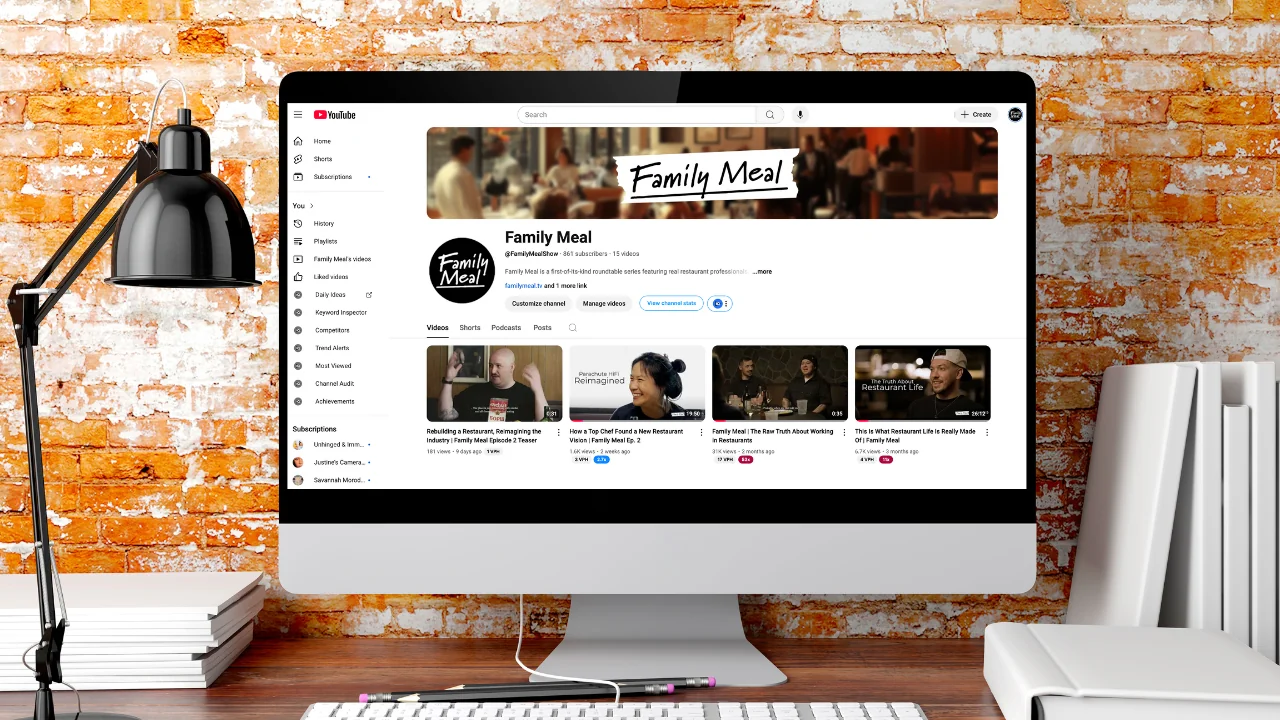
Yes, it offers short-form discovery through Shorts, but it also gives brands something Instagram and TikTok don’t offer in quite the same way. Depth plus search.
A viewer might discover your brand through a 30-second Short today, search for your company or product later, and eventually watch a longer video when they are ready to learn more. That gives YouTube an important advantage for brands selling products or services that require consideration.
Think about a B2B software company. Its audience doesn’t need just one type of video. Different people will have different questions depending on where they are in the buying process. A strong YouTube strategy can give the sales and marketing teams a library of videos designed to answer those questions.
- A 30-second Short might explain the problem.
- A two-minute video could show the solution.
- A five-minute product walkthrough could demonstrate how it actually works.
- A 10-minute customer story could help someone feel confident about buying.
- A comparison video could help buyers understand how the solution differs from other options.
- An implementation or onboarding video could reassure a buyer who’s worried about the switching process.
All of that content can live on the same YouTube channel and support different stages of the customer journey. That is where YouTube becomes more than another social platform. It becomes a searchable content library.
According to Wyzowl’s 2026 Video Marketing Statistics, YouTube remains the most widely used video marketing platform among video marketers, with 82% reporting that they use it. For brands with complex products, longer sales cycles, or audiences that need education before they buy, that combination of search and depth can make YouTube especially valuable.
Instagram vs. TikTok vs. YouTube: What Actually Sets Them Apart?
The biggest difference between these platforms is why people are watching in the first place.
On Instagram, someone might be catching up with friends, following creators, discovering brands, or looking for something visually interesting.
On TikTok, they may simply be scrolling to see what catches their attention. They might not know what they want until your video gives them a reason to stop.
On YouTube, they may already have a question, problem, or topic they want to understand.
The same brand can use all three. The mistake is assuming that the same video should be uploaded everywhere.
Sure, the idea can stay the same, but the execution should change.
How to Choose the Right Platform for Your Brand
So, how do you decide where your next video belongs?
Start with what you want the video to accomplish, then work backward.
1. Start With Your Audience
Where does your audience already spend time?
That sounds obvious, but brands often choose platforms based on popularity instead of actual audience behavior. If you’re not sure where to start, take a look at your demographics.
YouTube reaches a huge share of adults, while Instagram and TikTok are particularly strong among younger audiences. Pew Research Center data also shows significant differences by age, which means your target demographic should influence where you put your budget, but demographics are only the starting point.
You also need to consider how your audience uses each platform. Are they casually discovering ideas? Looking for recommendations? Researching a purchase? Learning how something works? Those behaviors can help you determine which platform is actually worth your investment. The biggest platform isn’t automatically the right one for your brand. The right platform is the one where your audience is most likely to notice, trust, and act on your content.
2. Content Goals and Funnel Stage
Once you know who you’re trying to reach, ask what you want the video to do.
Define your goals by the marketing funnel, which includes 3 stages: Awareness, Consideration, and Decision. At the top of the marketing funnel, you’re usually competing for attention. TikTok and Instagram can be powerful here because they both rely heavily on feed-based discovery, recommendations, and quick consumption, but as someone moves closer to a buying decision, their questions become more specific. They want to understand the product. They want proof. They want to compare options. They want to know whether your solution is actually right for them. This is where deeper video content becomes more valuable, and YouTube can play a particularly strong role.
This is why you shouldn’t think of your strategy as: One platform = one funnel stage.
Real buyers move between platforms and marketing funnel stages. Someone might discover your brand through a 20-second TikTok, follow you on Instagram, search YouTube for a product explanation, and then visit your website to book a demo. Your strategy should reflect that journey.
3. Sales Cycle Length
Here’s a simple rule: The longer the sales cycle, the more valuable depth becomes.
A brand selling an impulse-purchase consumer product may generate results with a high volume of short-form videos that grab attention and encourage quick action.
A B2B technology company selling a six-figure solution has a very different challenge. The buyer may need multiple conversations, stakeholder approval, proof of value, implementation details, and social validation before signing anything. That doesn’t make TikTok or Instagram irrelevant. It means they shouldn’t be expected to do all the work.
Use short-form content to create familiarity, generate demand, and get your brand into the conversation. Then use deeper content, including YouTube videos, to answer questions that come up once a potential client gets more serious. Your website, sales team, and other marketing channels can then help turn that interest into action.
4. Production Budget and Content Velocity
Here’s something marketers often miss: Your budget isn’t just about what you can spend on one video. It’s about how much useful content you can create consistently. You could spend $20,000 producing one hero film. Or you could structure the production so that the same shoot produces a hero video, several short-form cuts, product clips, a customer testimonial, paid-media variations, and other supporting assets.
That’s why you need to consider distribution before production, not after.
Bottle Rocket Media’s video marketing services are built around this broader approach, supporting video distribution across YouTube, Instagram, TikTok, LinkedIn, paid media, and other channels. If one shoot gives your team enough useful assets to support several months of marketing, the value of that production increases considerably.
5. Search Intent and Content Shelf Life
This is where YouTube has a major structural advantage.
Social feeds are built around what’s interesting now, but search is built around what someone wants to find. Those are two very different behaviors. A TikTok might generate a huge burst of reach, then taper off. An Instagram Reel can continue reaching people through recommendations, but a YouTube tutorial can continue to attract viewers months or even years later because the question it answers hasn’t gone away.
That becomes particularly valuable for high-intent searches such as:
- How does [product] work?
- [Product A] vs. [Product B]
- How much does [service] cost?
- How to choose a [solution]
- Best [solution] for [use case]
- [Industry] video marketing strategy
Think about the difference. Someone scrolling TikTok isn’t necessarily looking for your product. Someone searching “best solution for X” already has a problem they want to solve. When people ask a question, the platform and content offering that can capture that intent becomes much more valuable.
6. Measurement and Attribution
Views are useful, but views aren’t the strategy.
Instead of asking: “Which platform got the most views?”
Ask: “Which platform’s metrics tie back to the outcome we actually care about?”
If you’re looking to increase brand awareness, look at metrics like:
- Completion rate
- Engagement
- Qualified view rate
- Reach
If you’re looking to drive deeper engagement, look at:
- Engaged sessions
- Qualified traffic
- Watch behavior
- Website visits
If you’re looking to drive conversions, look at metrics such as:
- Demo requests
- Opportunities influenced by video
- Qualified leads
- Revenue associated with video touchpoints
Our B2B video marketing guide emphasizes that connecting video strategy to broader marketing and business goals is better than treating video as a standalone tactic. A video with thousands of views but no commercial impact is far less valuable than one with a smaller audience that produces qualified conversations.
That’s also why we’ve started factoring AI search into how we think about video distribution. YouTube videos are increasingly being cited in tools like ChatGPT and Google’s AI Overviews, meaning videos can now show up in places traditional SEO never reached. If that’s something you want to think about, we can help through our AI search optimization services.
Why a Multi-Platform Video Strategy Usually Wins
So, does your brand actually need to choose between Instagram, TikTok, and YouTube?
Not necessarily.
A single platform can give you reach. A multi-platform strategy gives your content more opportunities to be discovered, understood, remembered, and acted on.
The key is not to create three completely different strategies. Start with one strong content idea, then adapt it to the behavior of each platform. The story can stay consistent. The hook, pacing, framing, length, caption, and call to action should change based on where the video is being watched.
That matters because even short-form video doesn’t perform the same way everywhere. Metricool analyzed more than 6 million short-form videos across TikTok, Instagram, and YouTube and found that TikTok led in average views while Instagram led in interactions.
The takeaway isn’t that one platform is the winner. It’s that distribution changes performance.
That’s the real advantage of a multi-platform strategy. You can give one strong idea more chances to reach people at different moments and with different levels of intent.
Ready to Get More Value From Your Videos?
Your video strategy shouldn’t start with a platform. It should start with a purpose.
Before you decide between Instagram, TikTok, YouTube, or a combination of all three, you need to know what you want your video to accomplish, who you’re trying to reach, and how you want them to respond.
At Bottle Rocket Media, we bring strategy, creative, production, and distribution together to build video around where and how your audience will actually see it. From platform-specific content to paid distribution, our video marketing services help brands turn video into a tool that supports broader marketing goals, because the best video isn’t always the biggest production or the most expensive. It’s the one that reaches the right audience, in the right format, at the right moment.
Ready to put your video strategy to work? Contact us and let’s create something built to perform across platforms.