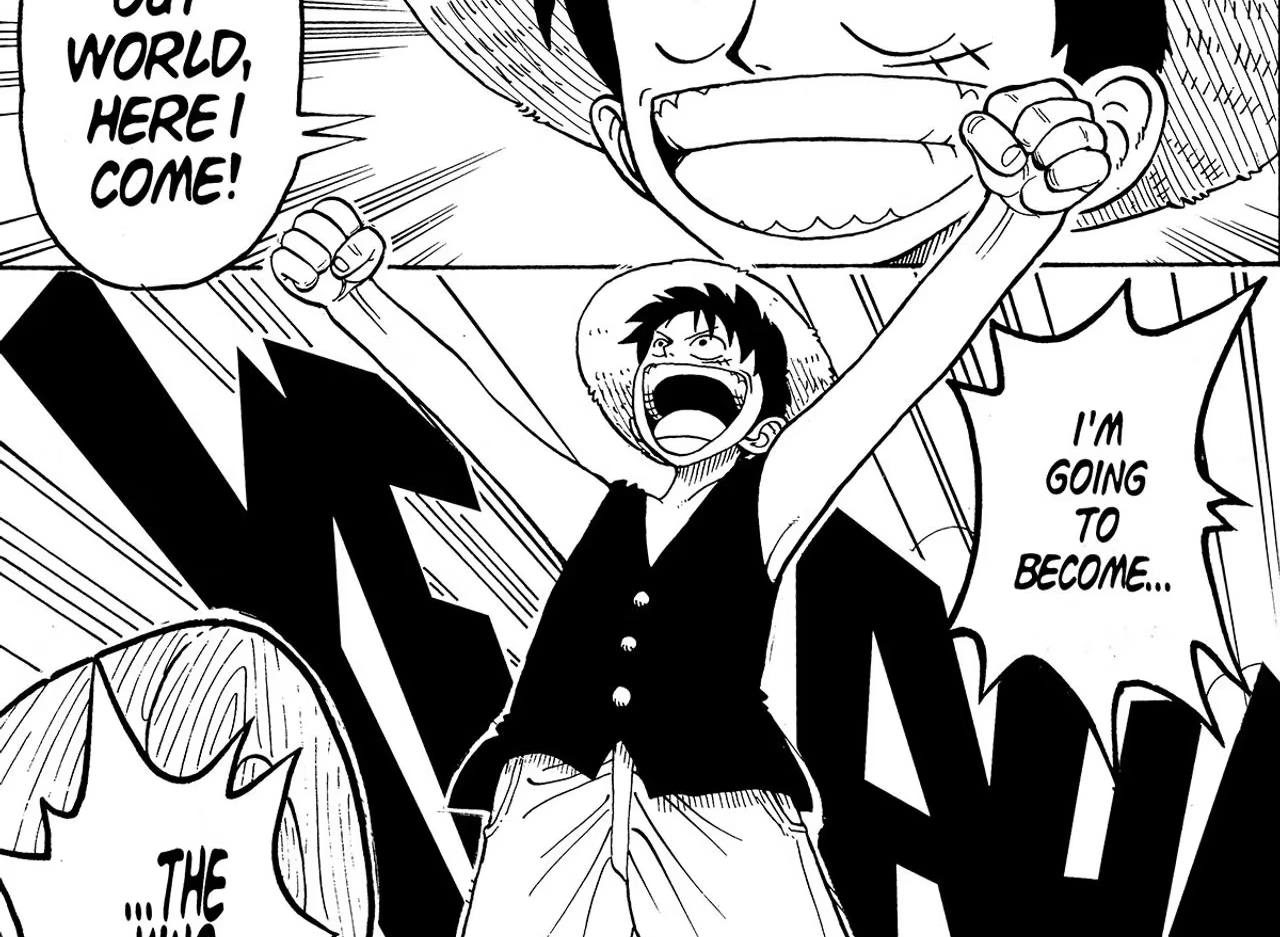
Before Goku turned Super Saiyan on Namek, and before Light Yagami wrote the first name in the Death Note, those iconic moments existed in only one place: a writer’s script.
It’s easy to believe that manga succeeds solely because of its great artwork. But strong art can’t carry a weak story. One Piece isn’t the best-selling manga in the world just because of Luffy’s looks. It works because Eiichiro Oda is a master of structure, pacing, and emotional payoff.
If you have a story in your head but don’t know how to turn it into something an artist can draw, you’re in the right place.
This guide breaks down how to write a manga script that actually works on the page and keeps readers hooked.
What is Manga?
Manga is the Japanese word for comics or graphic novels. It is a storytelling style that emphasizes emotion and movement, with exaggerated expressions to clearly convey feelings. These choices mean your script needs to think visually rather than descriptively.
Unlike Western comics, manga is usually categorized by audience: Shonen, Shojo, Seinen, and Josei. Shonen is for young boys and often focuses on action, friendship, and growth. Shojo targets young girls and emphasizes emotions and relationships. Seinen and Josei are written for adults and explore more complex or realistic themes.
You’ll notice that most manga is published in black and white. This isn’t just a style choice. It helps artists work faster and keeps production costs lower, especially for weekly or monthly releases.
What is a Manga Script?
A manga script doesn’t focus on long descriptions or inner thoughts. Instead, it gives direction.
You write what needs to be seen. Actions, expressions, movement, and mood come first. The goal is to guide the artist rather than paint every detail with words. When the artist understands the moment, the story flows better.
Struggling with the basics? A solid foundation in scriptwriting for animation can make this style much easier to apply.
Before you start writing, you should…
1. Build a Strong Foundation
Before you write panels or dialogue, you need a solid base. Without it, the script can feel messy, and you may find yourself rewriting the same scenes again and again.
Find the Core of Your Story
Start by asking yourself one simple question:
What is this story really about?
Is it a character facing their deepest fear? A small group standing up to an impossible enemy?
Genre helps set expectations, but theme gives the story meaning. Get clear on this first. When you know what the story is really about, every scene becomes easier to shape.
Write a Simple Plot Summary
Next, sit down and write what happens in your story.
For a short manga, this might be a single page. For a longer series, it could be several pages. Don’t worry about perfection. The goal is to get the story out of your head and onto the page where you can actually work with it.
What happens? To whom? Why does it matter? Where does it take place?
Write the plot the way you’d explain it to a friend over coffee, and remember that being messy is fine at this stage.
Break the Story Into Pages
This is the step that saves you from a lot of frustration later. Take your plot summary and divide it into pages. For each page, write a short note about what must happen there. For example:
- Page 1: Introduce the main character in their normal world. Make readers care.
- Page 2: Something unexpected happens. The story takes a turn.
- Page 3: The character realizes they can’t ignore the problem any longer. They have to act.
This page breakdown keeps things simple. It stops you from cramming too much into a single page or dragging one small moment across five pages. Think of it as a reality check before you start writing detailed panel descriptions.
Get to Know Your Characters First
Before you write dialogue, you need to know who’s speaking. What does each character want? What do they fear? How do they act when they’re calm, angry, or under pressure?
Characters should sound different from each other. When someone speaks, readers should recognize them without seeing their name.
So, spend time thinking about your characters before you script them. The more you know them, the more natural your dialogue will feel.
2. Structure Your Manga Script
Manga isn’t a random art. It follows clear visual rules. When you understand these rules, your script will feel intentional instead of scattered.
Kishotenketsu Explanation
While Western stories often rely on the Three-Act structure (Setup, Confrontation, Resolution), traditional manga often follows the Kishotenketsu structure. This structure focuses less on direct conflict and more on a “Twist” or a shift in perspective. It is essential for understanding the unique rhythm of Japanese storytelling.
- Ki (Introduction): Introduce the characters and the situation. Establish the status quo.
- Sho (Development): Expand on the introduction. The story moves forward and deepens, but without major changes yet.
- Ten (Twist): This is the climax or the “surprise.” An unexpected element is introduced, altering how you view the previous scenes. In manga, this is often the most critical moment, the “Unforeseen.”
- Ketsu (Conclusion): The fallout of the twist. The story wraps up, bringing the events of the “Ten” into a new balance.
If you are writing short stories or 4-panel manga (yonkoma), this structure is especially useful. Even in longer stories, thinking in terms of twists rather than constant conflict can make your script feel more natural and truer to manga storytelling.
Page Count and Panel Limits
A typical manga page contains 4 to 6 panels, though some may have more or fewer, depending on the pacing and artistic choices. An average manga chapter runs anywhere from 15 to 40 pages.
Why does this matter? Because if you’re planning a scene that requires 30 pages of plot but you script only 3 panels per page, you’ll run out of space. Think about this before you write and plan accordingly.
Right-to-Left Reading Flow
Manga is read from right to left, which affects far more than just the direction of the text. It changes how you place characters, arrange panels, and even decide who speaks first.
You’re not just writing a story. You’re guiding the reader’s eye across the page, making every panel choice affect pacing and clarity.
3. Figure Out Your Script Type
There is no single correct way to format a manga script. What works best depends on how you work and who you’re working with. Most writers fall into one of three common approaches. The right choice is the one that fits your relationship with the artist.
Panel-by-Panel (Screenplay Style)
This is the most common format, especially if you don’t draw. Every page and panel is written out in text, one by one.
You describe what appears in each panel, including expressions, actions, sound effects, and dialogue. The level of detail is high because the script needs to communicate everything clearly.
This format works best when you’re working with an artist you don’t know well or when the story depends on very specific visual moments. Clear instructions help avoid confusion and reduce revisions.
The Plot Script (Marvel Method)
This approach focuses more on story beats than panel layout. Instead of breaking down every panel, you describe what happens on each page or across a short sequence.
The artist decides how many panels to use and how to arrange them. Then, dialogue is added after the art is drafted. This method requires trust and good communication.
It works best for experienced teams where the artist is strong at pacing and visual storytelling.
Example:
PAGE 1: Scene opens in a rainy alleyway. The mood is heavy and dark. Kenji is confronting Akuma. Kenji is looking strong but isolated. He challenges Akuma, telling him, “It ends here,” and demanding he draw his weapon. Akuma reveals himself from the shadows, looking confident and smiling.
As you can see, this method gives the artist creative freedom to shape the visual rhythm of the story while keeping the writer focused on emotional beats and narrative momentum.
The “Name” (Rough Storyboard)
In Japan, this is the standard way that many manga are planned. A “Name” is not a polished script. It’s a rough storyboard made with simple sketches and handwritten dialogue.
For this, you don’t need to be a good artist. Stick figures and basic layouts are enough. The goal is to check pacing, flow, and page balance before final art begins.
This method works best if you can sketch even a little. It’s one of the fastest ways to see whether your story reads smoothly before committing to detailed artwork.
4. Write Your Manga Script
Now things get practical. This is where your script starts to turn into real pages that an artist can work with.
Panel Description
Panel descriptions should be short and focused. One or two sentences are usually enough to tell the artist what matters in the frame.
A good panel description answers a few simple questions.
- What’s in the frame (wide shot, close-up, etc.)
- Where the character is and what they’re doing
- The mood or emotional tone
- Any lighting or special details that matter
Example of a good description:
Close-up of Maya’s face. Tears streaming. Jaw clenched. Determined but heartbroken.
This description tells the artist exactly what to show and why it matters.
Important Dialogue Rules
When writing a manga script, you should keep each line of dialogue to 1 to 15 words. That’s roughly 2-3 sentences. Longer lines are harder to fit into speech bubbles and harder to read.
Manga is visual storytelling, so let the art convey emotion, and let the dialogue add meaning or intent.
Additionally, you should always list dialogue in reading order. For manga, that means right to left. So, write the character name first, then the dialogue.
Example:
KAIA: I don’t understand what’s happening.
KAIA: (cont.) Nothing makes sense anymore.
MYSTERIOUS VOICE (off): You’re asking the wrong questions.
Note: You don’t need quotation marks. The character name already shows who is speaking. “Cont.” means the same character keeps talking. “Off” means the voice comes from outside the frame.
Remember to spread dialogue across panels so the page can breathe. Having too many characters in a single panel makes it hard to read and visually crowded.
Dialogue, Thoughts, and Narration
After you write out your dialogue, make sure to tell the artist which shape to draw. If you mix dialogue with internal thoughts or narration, the reader won’t know whether a character is speaking aloud or just thinking.
1. Dialogue (The Speech Bubble)
A standard round or oval bubble with a tail pointing to the speaker.
Example Text: “Watch out!”

2. Internal Thoughts (The Thought Bubble)
A cloud-like, fluffy bubble with small circles trailing down to the character. Other characters cannot hear this.
Example Text: (I hope he didn’t see me hide that key…)

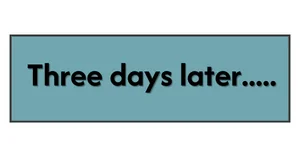
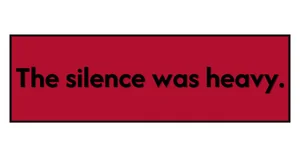
3. Narration (The Caption Box)
A sharp-edged rectangular box (usually floating in the corner of a panel). It is used for:
- Time Shifts: “Three days later…”
- Location: “The Abandoned Temple, deep in the forest.”

- Mood/Omniscient Voice: “The silence was heavy.”
Sound Effects
Sound effects (SFX) are onomatopoeia: BOOM, CRASH, WHOOSH. They appear directly in your script, so the artist knows where sound and motion should land. Write them clearly and with intention:
Example:
- SFX: CRASH!
- KAIA: (shouting) Run!
Sound effects add energy and motion. They’re part of the visual language, so think of them as cues for intensity and rhythm. They help the moment feel loud, fast, quiet, or sudden without needing extra explanation.
Camera Angles Artists Understand
Using simple camera terms helps the artist understand what you’re imagining. You don’t need to use these constantly, but make sure to use them when framing really matters. Here are some basic camera terms:
- Close-up: Face/object focus. Builds emotion.
- Medium shot: Waist-up with background.
- Wide shot: Full scene/scale.
- Low angle: Looking up. Makes the subject powerful.
- High angle: Looking down. Shows vulnerability.
- Over-the-shoulder: Behind one character toward another.
Using the right camera angles can dramatically shape how a scene feels. Even a single, well-placed term can help your artist capture the exact mood or focus you’re aiming for.
Make Each Character Sound Different
One of the fastest ways to weaken a script is to give every character the same voice.
A formal character uses different words than a teenager. A nervous character speaks in fragments. A confident character speaks in complete thoughts. A character from a different time period or place might have a unique way of phrasing things.
Start by writing the dialogue first, without names attached. Read it back.
Can you tell who’s speaking? If not, rewrite until each voice is distinct.
Sample Manga Script Format
Here’s a simple template of how a manga script is usually formatted. This isn’t the only correct way, but it’s clear, readable, and easy for an artist to follow.
TITLE: [Your Story Title]
CHAPTER: [Chapter Number]
PAGE ONE
PANEL 1:
[Description of the scene, camera angle, setting, and mood. One to two sentences.]
CHARACTER NAME: Dialogue goes here.
SFX: [Sound effect if needed]
PANEL 2:
[Next panel description]
CHARACTER NAME (CONT.): Character continues speaking.
OTHER CHARACTER: A different character speaks.
This format is clean and practical. The artist can clearly see what to draw, where dialogue and narration go, and what mood each panel needs to convey. That clarity is what makes a script enjoyable to work from.
What It Looks Like Filled In
(Using the template above, here is a scene from a fantasy manga.)
TITLE: SHADOW TEMPLE
CHAPTER: 1
PAGE 1
PANEL 1 Wide establishing shot. An ancient temple during a storm. Vines cover the stone walls, and the sky is dark grey.
SFX: THUNDER (RUMBLE)
PANEL 2 Medium shot. KAIA stands at the entrance. Her clothes are soaked from the rain. She has her hood up. Her eyes are focused and determined.
KAIA: This ends tonight.
PANEL 3 Close-up of her hand gripping an ancient key. Lightning flashes, revealing a strange, glowing engraving on the metal.
NARRATION: The key her mother died protecting.
PANEL 4 Low angle. The temple door cracks open. Darkness spills out. Kaia is half-lit by the lightning.
KAIA: (whisper) Here we go.
SFX: CREAAAAK
5. Common Mistakes New Manga Writers Make
Even strong ideas can fall apart on the page if the fundamentals are off. New manga writers often make the same small missteps, not because of a lack of talent, but because visual storytelling follows different rules than prose.
The following mistakes can quietly ruin a good story.
Cramming Too Much Into One Page
Trying to fit everything into a single page is one of the fastest ways to create visual chaos. Ten panels packed with heavy dialogue and complex action overwhelm the reader.
Instead, give your pages room to breathe. Sometimes one large panel can say more than five small ones. Space helps emotion land, and your actions feel clear.
Over Describing The Artwork
If the art shows a character crying, don’t have them say “I’m sad.” The image already communicates that.
Use dialogue to add something new, maybe what they’re sad about, or what they’re going to do about it.
Example:
Weak option: (Redundant)
Panel: Close-up of a character with tears streaming down their face.
Dialogue: “I’m sad.”
Strong option: (Adds Meaning)
Panel: Same close-up, tears falling.
Dialogue: “I promised myself I wouldn’t cry over this again.”
This works because the art shows emotion while the dialogue reveals context, conflict, or intention and displays exactly what’s happening inside the character.
Forgetting That Manga Is Visual
If your dialogue alone explains the entire story, you’re thinking like a novelist. Manga tells stories through images first.
Bad Example:
“As you know, we’ve been enemies for ten years, and your father stole the sacred artifact.”
Good Example:
“I haven’t forgotten what your father did.”
The second version feels like a real conversation. It hints at a backstory and allows the reader to connect the dots. In manga, the art does the heavy lifting, while the dialogue supports what the reader can already see.
Introducing Too Many Characters Too Fast
Early chapters should stay focused. In the first chapter, two or three main characters are usually enough.
Too many names and faces too soon can confuse readers and weaken the emotional connection. Give characters space to make an impression.
Ignoring Pacing Variety
If every page uses small panels, the story feels rushed. If every page uses large panels, it can feel slow and heavy.
Strong manga uses panel variety to control tempo. Tight, fast panels heighten action and tension. Open, spacious panels give emotional moments time to breathe. This balance keeps the story dynamic and pulls the reader smoothly along.
Starting Without A Strong Hook
The first chapter needs its own mini story. Readers should meet the character, understand the world, see a problem, and feel curious about what happens next.
If chapter one doesn’t give that “I need to keep reading” feeling, the rest of the story may never get the chance to shine.
Do You Need to Be an Artist to Write Manga
The short answer? No.
You don’t have to be an artist to create manga. Many successful creators focus on the story first and collaborate with skilled artists to bring it to life. The key is clear communication. A strong script gives the artist everything they need to understand your vision without ever seeing your drawings.
For example, the famous manga Death Note was written by Tsugumi Ohba and illustrated by Takeshi Obata. Their collaboration worked because the script was clear and flexible.
Writing solo means you control everything, but you also do all the visual planning. Collaboration lets you focus on the story while an artist brings it to life. Both approaches work, but they require different skills.
This skill grows with practice. Start simple. The more you write and observe, the more natural manga scripting will feel.
Getting Started Today
The hardest part of writing a manga script isn’t the formatting or the plot structure. It’s the fear of the blank page.
Your first draft doesn’t have to be perfect; it just has to be finished. Once the script is written, you can polish the dialogue, fix the pacing, and sharpen the descriptions. But you can’t fix a blank page.
From video production services to motion graphics services, we specialize in bringing creative visions to life in ways that stop the scroll and hold attention. When you’re ready to start your next project, contact Bottle Rocket Media.
Grab your outline, pick a format, and start with PAGE 1. Good luck!