You can build the smartest product in your industry and still lose to a competitor simply because they explained their product better.
Every complex product has this problem. Your buyers want the results you deliver, but when your product involves technical workflows, advanced software, or processes, they close the tab because confused buyers never buy.
That is why complex products rely on animation to tell their story. Animation can turn invisible software, technical workflows, and dense data into a clear visual story anyone can understand in 90 seconds or less.
Let’s look at why animation works so well for complex products and how you can use it to turn confused visitors into confident buyers.
Why Do Complex Products Lose Buyers?
Complex products lose buyers before the first sales call or conversation because people can’t picture what the product does, can’t explain it to their boss, and don’t want to book a call just to find out. Instead, they pick the simpler option and move on.
That’s not due to a lack of interest. It’s a lack of clarity.
Gartner’s survey found that 67% of B2B buyers prefer a rep-free experience. They research alone first. Your website, your videos, and your content do the selling long before a rep gets a seat at the table.
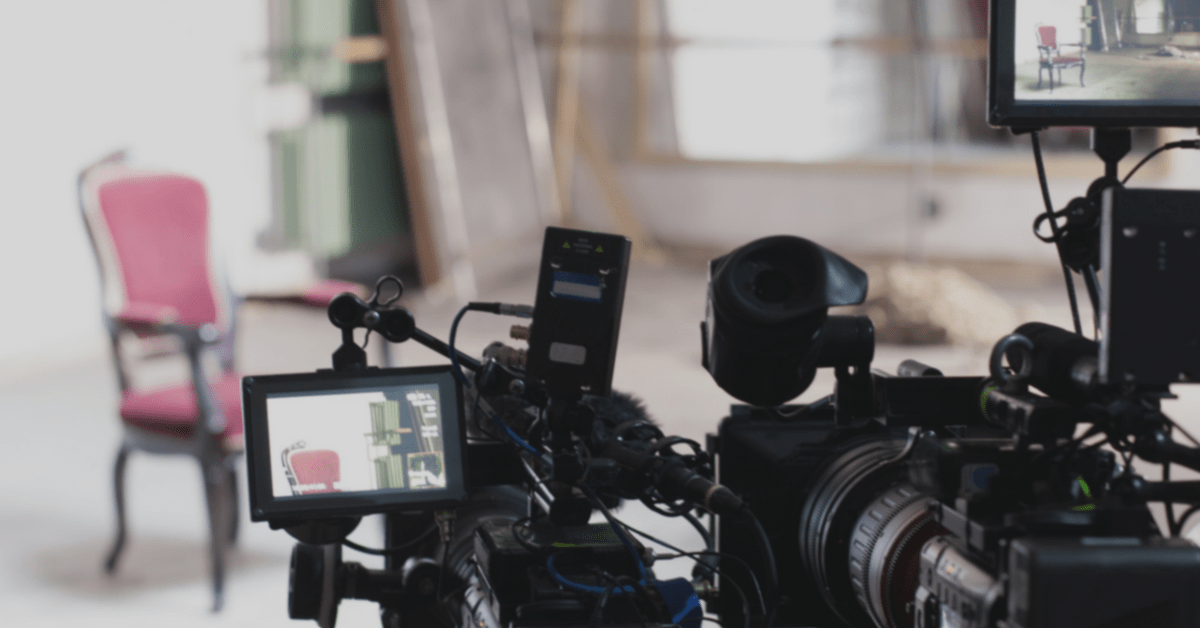
The challenge is that not every product is equally easy to demonstrate. A physical consumer product is easy to prove. You hold it up to a camera, press a button, and show the result. Look at the video we filmed for Dyson. You’re watching somebody turn the hair tool on, wrap the hair, and watch it curl on camera, which means you get the whole story in five seconds. Complex products do not work like that. You cannot point a camera at an AI algorithm, a cloud security protocol, or a cellular medical process and expect a buyer to care.
That gap between what your product does and what your buyer understands is why an explainer video exists. A strong explainer video bridges the gap between the buyer and your product before the first call ever happens.
Why Animation Works for Complex Products
Animation works because it lets you control how you explain your product.
Here are seven simple reasons animation makes complex ideas simple and helps your audience see your product’s value.
1. It Shows What a Camera Cannot Film
A camera can only capture what physically exists in front of the lens.
If you sell API infrastructure, predictive analytics, or a medical device that works inside the human body, live footage leaves you with very few options. You end up showing people typing on laptops in a glass office, workers staring at servers, or clinical footage of doctors examining patients, but does any of that actually explain what your product does? Not really.
Animation removes those physical limitations. Need to show how data travels through an encrypted cloud network in milliseconds? You can visualize the entire process. Want to explain how a credentialing system verifies thousands of physician records? You can show it happening on screen.
Instead of asking your audience to imagine how everything works, you can give them a clear picture.
In our work for Basis, we used custom animation and illustration to bring their flagship software platform to life. Instead of relying on static screenshots, the motion graphics turned an abstract digital platform into a smooth, connected visual story, showing viewers how the software actually changes the way they work.
2. It Keeps Attention With Story and Movement
The human brain is wired to notice movement. Cognitive research on visual attention confirms that the moment an object moves on a screen, the human eye automatically tracks it.
In a complex product video, motion may feel decorative, but it helps direct your attention.
When you pair purposeful movement with a relatable story, you can hold a buyer’s attention through technical details. Instead of asking them to read a long list of features, you give them something to follow.
Research across more than 13 million business videos in Wistia’s 2026 State of Video Report shows that educational and explainer videos consistently hold strong viewer retention when they focus on solving one clear, everyday problem.
That’s an important lesson for your own video. Don’t try to explain everything at once. Give your audience a problem they recognize, then show them how your product helps solve it.
3. It Turns Multi-Step Processes into Small Steps
Most complex products involve a sequence of actions. Step A triggers Step B, which automates Step C.
Now imagine explaining that five-step workflow in a single paragraph. Your reader has to remember the first step while trying to understand the fourth. If they lose track, they have to go back and read it again. That’s a lot of work to ask of a potential buyer.
Animation makes the process easier to follow by showing one step at a time. You can introduce an action, show what happens next, and guide the viewer through the entire workflow visually.
Look at our Litera Transact motion graphics explainer. Legal deal management involves mountains of paperwork, signature tracking, and endless review cycles. Trying to explain every feature at once would overwhelm any managing partner. We decided to start the animation with messy paperwork and complicated deal processes. Then we show how automated signature packets and real-time task trackers bring order to that chaos.
By the end, viewers can see how each feature works together to simplify a complicated process, rather than having to piece it together themselves.
4. Stripping Away Interface Clutter
If you sell software, dropping a raw screen recording of your dashboard onto your homepage usually backfires. Why? Because real enterprise dashboards are built for daily users, not first-time buyers. They see sidebars, settings icons, tiny numbers, and dropdown menus. That leaves buyers wondering, “How long will it take me to learn all of this?” Stylized UI animation can make that first impression much easier.
As we covered in our guide on getting your SaaS explainer video right, the smartest approach is to use your real product interface as the foundation, then simplify it for storytelling.
With animation, you can:
- Remove distractions: Hide secondary tabs and menus that don’t matter to the main story.
- Zoom in on the payoff: Highlight the exact button or metric your buyer needs to see.
- Guide the eye: Use smooth motion to show how a task moves from “pending” to “approved” in just two clicks.
Your product still looks real, but your buyer doesn’t have to figure out the entire interface to understand its value.
5. It Helps Buyers Remember Your Pitch Later
Why do buyers remember a 90-second animated video better than a 2,000-word product page?
Psychologist Allan Paivio’s Dual-Coding Theory explains the mechanism. The human brain processes information through two separate channels: one for verbal language (what you hear or read) and one for non-verbal visuals (what you see).
When a buyer reads a whitepaper (a detailed written guide on a specific topic), only one channel is working, but when they watch an animation with a clear voiceover and matching visuals, both channels work together. What they see backs up what they hear, leaving two memory traces in the brain instead of one.
That matters in B2B sales, where buying committees often include six to ten stakeholders. The person who watches your video may need to explain your product to a CFO, a technical lead, or an entire team. A clear animation gives them a mental picture they can use to tell your story accurately.
6. It Is Easy to Update When Your Product Changes
Complex products rarely stay the same for long. Software companies ship new interfaces, medical brands update regulatory language, and enterprise platforms add new integrations every quarter.
So what happens when your product changes after you’ve already invested in a video?
If you filmed a live-action video with actors on a rented set, even a small change to a product screen could mean bringing everyone back for another shoot.
Animation gives you more flexibility. Because animated videos are built in layers, a studio can often update individual elements without rebuilding the entire video. If your interface changes, your pricing tier shifts, or you need to localize the video into three different languages, the team can replace the relevant assets and render a new version.
That can make future updates much more manageable. Planning for those changes early is also one of the best ways to manage your long-term motion graphics cost while keeping your marketing assets accurate.
7. Working Across Every Channel (Even With the Sound Off)
A great animation shouldn’t just sit on your homepage waiting for traffic. It should work across your entire sales and marketing funnel.
Your buyers might scroll LinkedIn between meetings, open sales emails on their phones, or walk past your booth at a noisy trade show. In many of those situations, the sound is turned off. That’s why your animation needs to communicate visually.
Clear on-screen labels, kinetic typography, and strong visual hierarchy help people follow your message even when they can’t hear the voiceover.
For example, a single 90-second hero animation can become:
- 15-second vertical clips for LinkedIn, Instagram, and TikTok ads.
- Short animated GIFs dropped right into cold sales emails to get more replies.
- Searchable video assets on YouTube, the #1 most-cited source in Google AI Overviews.
When we built a multi-channel campaign for the Illinois Retail Merchants Association, we paired core storytelling with over 400+ short videos built for social feeds. That system helped drive 43 million impressions and a 707% jump in search clicks. Think about what it can do for you.
How to Make Sure Your Product Animation Actually Converts
Hiring an animator is easy. Creating an animation that helps buyers understand your product and take the next step requires a little more thought.
Before you start production, keep these three rules in mind.
- Match the pace to the topic: Don’t rush through the hardest parts of your product. Slow the animation down when showing a complex step so the viewer’s brain has time to catch up.
- Use visual metaphors for invisible tech: If your product works behind the scenes (like cybersecurity or AI), compare it to something people already know in real life, like a digital lock or a traffic guard.
- End with one clear next step: Don’t leave viewers wondering what to do after the video ends. Tell them exactly where to go next, whether that is booking a quick demo or starting a free trial.
Ready to Turn Your Complex Product into a Story Buyers Understand?
You worked hard to build a great product. You shouldn’t lose deals just because buyers can’t figure out how it works in the first thirty seconds.
At Bottle Rocket Media, we don’t just put movement on a screen and call it a day. We start by learning what makes your product tick, finding out where your buyers get stuck, and turning your message into a story that clicks right away. That is how animation makes complex ideas simple and how the right video becomes your best salesperson.
Whether you need custom explainer video production to break down a technical platform, or full-service corporate video production to build trust with investors, employees, and enterprise buyers, our team handles the strategy, scripting, design, and distribution under one roof.
If you are ready to turn your product into a story people actually remember, contact us today and let’s build something that works.