What separates a B2B video strategy that drives revenue from one that just drives views?
It comes down to whether your video content is helping buyers move toward a decision or just sitting on a page collecting impressions.
Most B2B teams are doing the latter without realizing it.
According to Wyzowl, 67% of video marketers measure ROI using views, and 63% use engagement metrics like likes and shares, but only 32% track bottom-line sales. The metrics most teams default to are the ones least connected to revenue.
If you want to build a B2B video marketing strategy that works, you have to start with four things: clear goals tied to real business outcomes, content mapped to every stage of the buying journey, intentional channel selection, and measurement that tracks pipeline and revenue.
This guide breaks down exactly how to build that system, what video formats to use, where to put them, and how to know if they’re working.
What Makes B2B Video Marketing Different
Before you decide what kind of video to make, you need to understand the environment you’re working in.
B2B video marketing is not built around viral moments or impulse decisions. The stakes are higher, the sales cycle is longer, and the decision rarely belongs to one person.
Forrester’s State of Business Buying research found that the average B2B buying decision involves 13 people inside the organization, with 89% of purchases touching more than one department.
Finance, IT, operations, and leadership all have a seat at the table, each evaluating your solution through a completely different lens. As a result, most B2B sales cycles last between 60 and 180 days.
That changes everything about how you approach video content. A single campaign or a single format won’t carry the weight.
Your videos need to build trust with buyers who aren’t ready yet, educate them as they compare options, and remove the last remaining doubts right before the deal closes.
Video is the format that can do all three, but only when it’s built around a real strategy.
5 Types of B2B Video Every Brand Should Know
The format you choose signals who you’re talking to and what you want them to do next. That’s why strong B2B video marketing isn’t about making one video and hoping it works everywhere. Each format should have its own job to do.
Here are five types of videos that consistently perform in a B2B video marketing strategy, along with what makes each one worth using.
1. Explainer Videos
An explainer is a short, focused video, usually 60 to 90 seconds, that answers what your product does and why the buyer should care.
In B2B, that clarity matters. Products are often complex, buyers are busy, and no one wants to dig through a long page just to understand the basic value.
A sharp explainer can do the work of a 10-minute sales call when it’s built around the right idea. The trick is to start with the buyer’s problem. Show the frustration. Show the inefficiency. Show the gap your solution closes. Then show the fix. That structure gives the viewer a reason to keep watching because they recognize the problem before you ever ask them to care about the product.
2. Product Demo Videos
When it’s built well, a demo video can become a sales tool that gives buyers confidence before they ever speak to your team.
Research from Brightcove and Ascend2 found that 65% of B2B buyers say video is the most useful content format when researching potential solutions, and that the two most-watched video types were product demos and product reviews.
So, meet your audience where they already are.
For example, if your ideal customer is a marketing operations team, don’t spend your product demo clicking through every dashboard and feature. Instead, show them how the product fits into the work they’re already doing. Walk them through a real scenario, highlight the bottlenecks it eliminates, and demonstrate how it helps them reach the next step faster.
That’s where a smart B2B video marketing strategy makes a difference. Instead of showing everything, your video should focus on presenting the right thing to the right buyer.
A buyer who can see themselves using your product is already much closer to saying yes.
3. Customer Testimonial Videos
Testimonials earn trust at the stage where trust matters most because it’s more credible than anything your marketing team can write. It features a real customer on camera explaining how your product solved a real problem. Unlike awareness-focused content, testimonial videos provide validation. They help prospects see how others have solved similar challenges, making them especially valuable when trust and credibility become deciding factors.
The best testimonial videos are specific. They feature a customer from a similar industry, a challenge the buyer can recognize, and a concrete result.
It doesn’t encompass a statement like, “The platform helped us grow.”
Instead, it says: “We reduced onboarding time, improved campaign visibility, or made reporting easier for a team that was already stretched.”
The more specific the result, the easier it is for a buyer to picture it helping their own team.
So put these videos where those buyers are already making decisions, like your homepage, product pages, proposal follow-ups, and sales emails, rather than a “Resources” page that your buyers may never visit.
4. Webinars and Live Video
Webinars still work because they build trust through education.
For buyers in the middle of an evaluation process, that combination is hard to beat. They get useful information, they hear from real experts, and they can judge whether your company understands their world. The mistake most B2B brands make is treating a webinar as a single event. It should not end when the live session ends.
A 60-minute webinar can become a YouTube video, six LinkedIn clips, a blog post, short email clips, sales enablement content, and a month of follow-up material. The brands getting the most from webinars are building comprehensive video distribution strategies around every recorded piece of content. That’s how one event turns into a content engine.
If you want to learn more, check out our blog on how to create an effective video distribution strategy.
5. Thought Leadership Videos
A thought leadership video is what you create for B2B buyers who aren’t ready to buy today.
It may sound like a long game, but it works.
Ehrenberg-Bass Institute research shows that only 5% of potential buyers are actively in-market at any given time. The other 95% are forming opinions, building shortlists, and quietly deciding which brands they’ll trust when the time comes.
Short, direct point-of-view videos from real people inside your company can help you reach those buyers early. These videos don’t need to feel overproduced. In fact, they often work better when they feel direct and human. Just have a clear perspective, real insight, and the confidence to share it consistently.
How to Build a B2B Video Marketing Strategy That Works
Knowing the formats is step one. Building a system that connects those formats to real business outcomes is where a B2B video marketing strategy either succeeds or stalls.
Here’s how to do it right.
Step 1: Define Your Goals and Your Audience
Start with a business problem.
Are you losing buyers to a competitor with stronger social proof? Customer testimonial videos can help rebuild the trust you’re losing.
Are deals stalling because prospects can’t picture success with your product? A targeted demo series might close that gap.
Is awareness your problem? Consistent thought leadership content creates visibility and pipeline over time.
Once you know the goal, map it to your audience, and in B2B, that usually means more than one person. Remember, the CFO needs to see ROI. The IT lead needs to understand the implementation. The end user needs to picture how the product fits into their daily workflow.
A B2B video marketing strategy that speaks to only one of these people is operating at half its potential.
Step 2: Map Video Content to Your Marketing Funnel
Think about your video content layers, but don’t treat them as a straight line. Today’s B2B buyers are more informed than ever. Before they talk to sales, they may already have searched Google, watched YouTube videos, checked LinkedIn, compared vendors, read reviews, and used AI search tools to summarize options.
That shift changes how your content needs to work. Traditional SEO still matters, but buyers are also finding answers through ChatGPT, Claude, Perplexity, Gemini, and other answer engines. So your content needs to support SEO, AEO, and GEO, meaning it should be easy to find, easy to understand, and clear enough for both people and AI tools to summarize accurately.
- Top of Funnel (Awareness): Short educational clips, thought leadership content, LinkedIn-native video. Your job here is to be useful and visible. Keep these under 90 seconds and post them consistently. Remember, awareness is built over time.
- Middle of Funnel (Consideration): Explainers, webinars, and product overviews. Buyers at this stage are actively comparing options. Your video needs to educate and differentiate, explaining what you do and why you’re the right choice for their specific situation.
- Bottom of Funnel (Decision): Testimonials, case study videos, personalized demos. This is where video removes the final friction point. Your prospect is 90% sold. They need social proof, specificity, and a clear path to saying yes.
- Post-Sale (Retention): Onboarding videos, product training, customer milestone content. This layer is almost always overlooked, and it’s one of the highest-ROI investments in a B2B video marketing strategy. Customers who understand your product stay longer and expand faster.
The modern funnel is no longer linear. Buyers discover, compare, validate, and revisit information across many channels before making a decision. A strong B2B video marketing strategy provides them with the right content at every stage of the process.
Step 3: Choose Your Channels
Great video content in the wrong place is wasted content, so be intentional about where each asset lives.
- LinkedIn: One of the strongest platforms for B2B video marketing right now. LinkedIn video viewership grew 36% year-over-year between late 2024 and early 2025, and native video posts earn 5x more engagement than shared links. The rule is to upload natively, always. Never share a YouTube link.
- YouTube: It’s the world’s second-largest search engine, and it’s now the most-cited domain in Google AI Overviews, appearing in nearly 29.5% of all citations. For buyers researching problems your product solves, YouTube gives you organic visibility that builds over time. Pair your video content with smart video SEO practices, and that visibility compounds.
- Your Website: The place where serious buyers go to validate their decision. Product pages with embedded demos convert at higher rates. A well-organized resource hub also helps. Sort videos by industry, use case, or buyer stage so visitors can quickly find what matters to them.
- Email and Sales Sequences: They are often overlooked as video channels. Adding “video” to an email subject line alone increases open rates. A sales rep who can send the right testimonial or demo clip during a conversation closes deals faster than one who can’t.
If you want to understand the difference between creating a video and getting it seen, Bottle Rocket Media’s guide to video production vs. video marketing explains why both sides need to work together.
Step 4: Optimize, Distribute, and Measure
Most B2B teams measure video success by views. That’s the wrong metric.
A video with 5,000 views and zero demo requests is underperforming. A video with 200 views and 12 qualified conversations? Now that’s performing well.
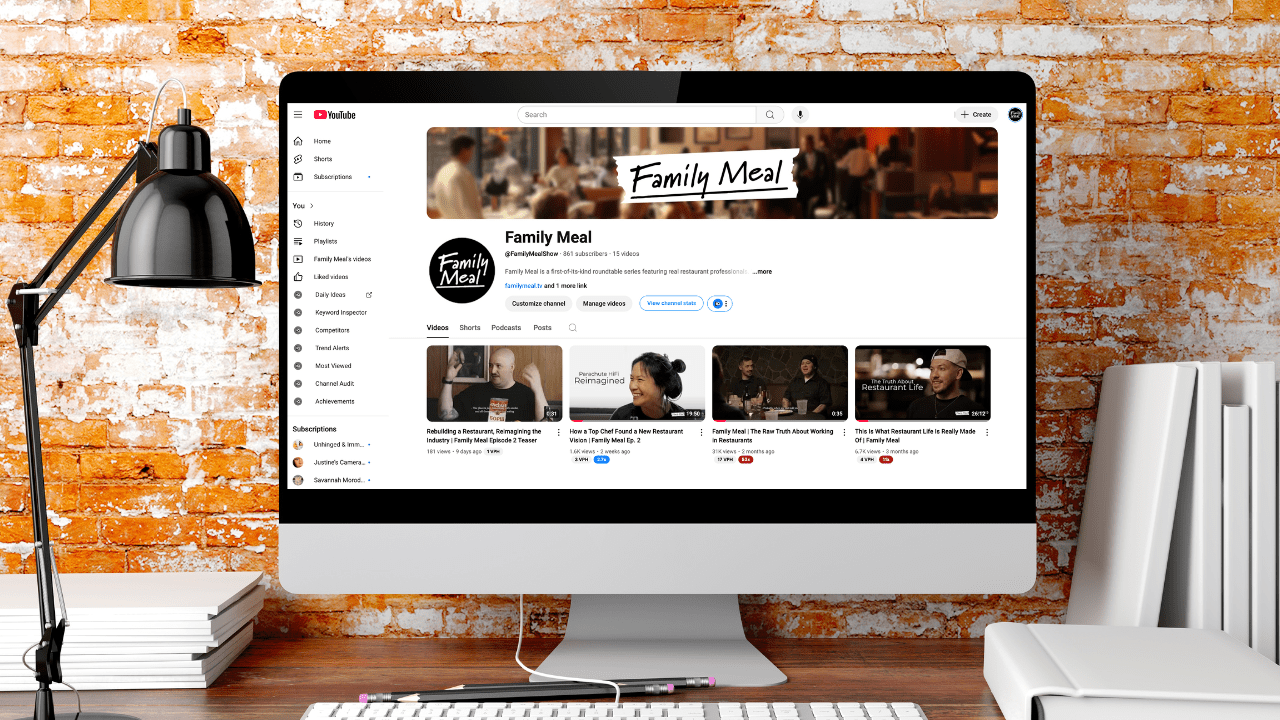
When Basis Technologies partnered with Bottle Rocket Media, the resulting B2B campaign achieved a 90% engagement rate with their target audience by telling a real, human story rather than chasing views and impressions.
The difference is in what you choose to measure.
Build your measurement framework around these three levels:
- Engagement: Watch time, completion rate, click-through rate. This tells you whether your content is connecting with the right people.
- Pipeline: Demo requests sourced from video, video-influenced leads, and content-to-conversation rate. This tells you whether your content is driving commercial activity.
- Revenue: Deal velocity for video-engaged accounts, pipeline value influenced by video, and closed revenue tied to video touchpoints. This is what earns your program more budget.
One optimization principle worth holding onto is to let the data tell you what to make more of. Ask yourself, which videos showed up in the history of your own won deals? Which drove the most demo requests? Build more of that, and retire what isn’t working.
B2B Video Marketing Trends to Know in 2026
The core principles of B2B video marketing are stable, but the tactics keep shifting. Here are five trends shaping how the best B2B teams are approaching video right now.
Short-Form Video Is Taking Over LinkedIn
Short-form video is becoming one of the most useful formats on LinkedIn.
Under-90-second native video clips are growing twice as fast as any other content format on the platform. That matters because it means B2B buyers are not only reading reports at a desk. They’re scrolling on mobile between meetings, calls, and decisions.
If your video doesn’t earn attention in the first three seconds, they’re already gone.
The best short-form videos make one clear point, answer one useful question, or share one sharp perspective.
AI Is Changing What’s Possible on Any Budget
AI is accelerating video production, especially for teams that need more content simultaneously and within the same budget.
According to Wyzowl’s 2026 research, 63% of video marketers now use AI tools for creation or editing, up from 51% the year before.
That makes sense. AI can handle transcription, captions, rough-cut assembly, clip extraction, and versioning much faster than a human team working from scratch.
The advantage goes to brands that use AI to move faster while keeping the human moments that build trust.
A real customer story, a clear point of view, or a founder explaining a hard-earned lesson will still carry more weight than a good video that feels empty.
For a clear breakdown of where AI helps and where it hurts, read our blog on when to use AI in video.
Personalized Video Is Replacing Cold Outreach
Cold outreach is easy to ignore. Personalized video is harder to dismiss.
A short video from a sales rep that mentions a specific company, challenge, and a specific reason for reaching out can feel far more relevant than another templated email.
Research shows personalized video can increase response rates by up to 36% compared to standard cold email.
This is where the B2B video marketing strategy and sales strategy start to merge.
The video doesn’t need to be overproduced. In fact, a simple, direct message often works better. The point is to show the buyer that the outreach was made for them. That’s where the ROI becomes more immediate.
Interactive Video Is Raising Conversion Rates
Interactive video gives buyers something to do while they watch.
Clickable CTAs, in-video polls, chapter menus, and branching paths let people choose what matters most to them without leaving the video.
That small shift can make a big difference.
Research from Motionvillee shows that interactive video can drive conversion rates 25–50% higher than static video formats.
For B2B brands, this is especially useful on demo pages, landing pages, and product education content. A buyer can watch the main message, click into a feature, answer a quick question, or move straight to the next step.
Expect interactive features to become a bigger part of B2B video marketing by the end of 2026, especially for teams trying to turn video views into real action.
Buying Committees are Changing What “Relevant Content” Means
Finance, IT, operations, leadership, and end users may all look at the same solution through completely different lenses. That changes what “relevant content” means.
Gartner research shows that content targeting a single stakeholder, rather than the full buying group, can have a 59% negative impact on purchasing consensus. So the next evolution of B2B video marketing strategy is making videos that help the whole committee align.
B2B teams will win in 2026 by creating content that helps every decision-maker move in the same direction.
Ready to Build a B2B Video Marketing Strategy That Works?
A strong B2B video marketing strategy is a system that helps the right buyers understand your value, trust your message, and move through the decision-making process with more confidence.
That means every video needs a reason to exist. Every channel needs a role, and every result needs to be measured against something more meaningful than views.
At Bottle Rocket Media, we help B2B brands turn video into a more strategic part of their marketing and sales engine. From video production services that shape the story on screen to video marketing services that help that content reach the right audience, we build around your goals from the start.
If you’re ready to make B2B video marketing a real part of your revenue strategy, let’s talk about what that could look like for your brand.