AI-generated video content is everywhere right now.
It’s fast, it’s efficient, and on the surface, it looks like a huge win for brands.
For most users, still something doesn’t quite land.
Why?
AI video erodes brand trust when it replaces human connection.
Just because it looks real doesn’t mean it feels real, and your audience can tell the difference.
We’re breaking down what’s happening with AI content, why trust is slipping, and how to build brand trust back through a real, professional video.
The Authenticity Gap and Why It’s Getting Bigger
People have always been good at spotting what feels fake. A forced smile. A canned answer in an interview. A product review that sounds like it was written by the company itself. We pick up on these things quickly, often before we can explain why.
The same thing is happening with AI-generated video. Audiences don’t need a tutorial on deepfakes to feel something is off. They just feel it, and once they feel it, the trust in your brand is gone.
If you’re thinking about how to build brand trust today, closing this authenticity gap is the first step.
The Numbers Are Hard to Ignore
A 2025 consumer survey by Checkr found that 95% of Americans say they’ve already encountered online content that felt suspicious or likely to be AI-generated.
According to research from Salsify, 87% of shoppers say they’re willing to pay more for a product from a brand they trust.
Trust doesn’t just influence decisions; it directly impacts revenue. When your video feels synthetic, you could lose a viewer, a sale, and often the word-of-mouth that goes with it.
A Deloitte Connected Consumer Study found that 68% of people are concerned that AI content is being used to deceive them.
That’s the audience your next video is walking into. Skeptical, aware, and ready to scroll past anything that doesn’t feel genuine. It makes earning and maintaining brand trust more challenging than ever.
What’s Changed in the Last Two Years
This isn’t just about chatbots writing blog posts anymore. AI video has crossed into territory that would have seemed like science fiction not too long ago.
You can now generate a realistic on-screen spokesperson from scratch, clone a real person’s voice with a short audio sample, and produce a full product video without ever turning on a camera.
That’s a remarkable technological leap. It also can create a trust problem for every brand that uses it without thinking it through.
What’s Actually Going On With AI Videos
Let’s talk specifics, because the AI video conversation has moved well past hypotheticals. These are things happening right now, and they have real consequences for how audiences perceive branded content and how much they trust the brands behind it.
1. Deepfakes Are Not a Fringe Issue Anymore
According to Keepnet Labs, deepfake files grew from around 500,000 in 2023 to a projected 8 million in 2025. That’s a 1,500% increase in two years. In the same period, fraud attempts using deepfake technology jumped by more than 2,100%.
One case that made international headlines: a company lost $25 million after fraudsters used a deepfake video to impersonate their CFO on a video call. The employees on the call had no idea they weren’t talking to a real person.
That story matters to your brand even if you’ve never touched a deepfake. Why? Because your audience now lives in a world where that happened, and could happen again, which means their guard is up.
When they see a realistic AI face, your credibility is being evaluated before your message is even heard.
2. AI Avatars Are Getting Harder to Spot
Platforms like Synthesia, HeyGen, and others now let brands create video presenters that look and sound remarkably real.
For internal training videos or low-stakes explainers, there’s a use case, but brands are increasingly using these avatars in customer-facing content, ads, product launches, and social campaigns, without disclosure.
3. Likeness and Legal Risk Are Rising
Some brands have been experimenting with AI-generated faces that resemble celebrities or other recognizable public figures.
Sometimes it’s intentional. Sometimes it’s the output of a model trained on too much data. Either way, it’s a legal minefield.
The U.S. passed the TAKE IT DOWN Act in May 2025, requiring platforms to remove nonconsensual deepfake content, and more legislation is coming at the state and federal levels.
If your video strategy involves AI-generated faces without explicit consent and clear disclosure, you’re not just taking a creative risk. You’re taking a legal one.
The rule here is simple: if you have to ask whether you can get away with it, the answer is already no.
4. Platform Rules Are Tightening
Meta, YouTube, and TikTok have all rolled out or updated policies on the disclosure of AI-generated content. What’s acceptable today may be flagged, restricted, or penalized tomorrow.
Brands building their video strategy around AI avatars are building on ground that’s actively shifting. That’s a fragile foundation for something as important as your brand’s public face.
We’re Not Against AI
Let’s be straight about this. AI is a tool. Like any tool, it’s not good or bad on its own; it depends on how you use it.
There are parts of video production where AI genuinely helps, and we’d be doing you a disservice to pretend otherwise.
The problem isn’t using AI. It’s using AI in the wrong places, specifically, in the places where your audience is looking for that human connection.
Where AI Works Well in Video Production
These are the areas where AI makes smart teams faster and smarter:
- Script research and first-draft outlining
- Editing assistance and timeline organization
- Automated captions, subtitles, and translations
- Storyboarding support and visual ideation during pre-production
- Mood boards to guide visuals, backgrounds, and lighting
- Audience analysis and performance reporting
None of these put an AI face on your brand. They work behind the scenes to streamline video production. That’s exactly where AI belongs.
Where AI Doesn’t Belong
Your audience-facing spokesperson. Your customer testimonial. Your CEO’s message to the company. Your brand’s origin story. These are the moments where people are looking for a real person, someone with something at stake.
A synthetic avatar standing in for a human in these moments doesn’t will fall flat and feel inauthentic.
Why Real Video Still Wins
We’ve spent years making videos for brands, including Fortune 500 companies, startups, nonprofits, healthcare organizations, and everyone in between, and the one thing that’s always true: the videos people remember are the ones that feel real.
Here’s why that doesn’t change, no matter how good AI gets.
1. Real Emotion Can’t Be Generated
When a customer gets emotional talking about how your product helped them, that’s not something anyone planned.
When a founder’s voice catches while telling their company’s story, that’s not in the script. Those are the real moments that make people stop and watch.
An AI avatar can display an expression that appears to convey an emotion. It cannot feel it, and audiences sense the difference.
That gap between simulated and genuine is exactly where brand trust lives or dies.
2. Real People Make Real Promises
When a real person appears on camera for your brand, something implicit is being communicated. They’re saying: I believe this enough to put my face on it. That’s accountability. That’s credibility.
A synthetic spokesperson can deliver the same script word-for-word, but without skin in the game, it just doesn’t carry the same weight.
3. Production Quality Tells Its Own Story
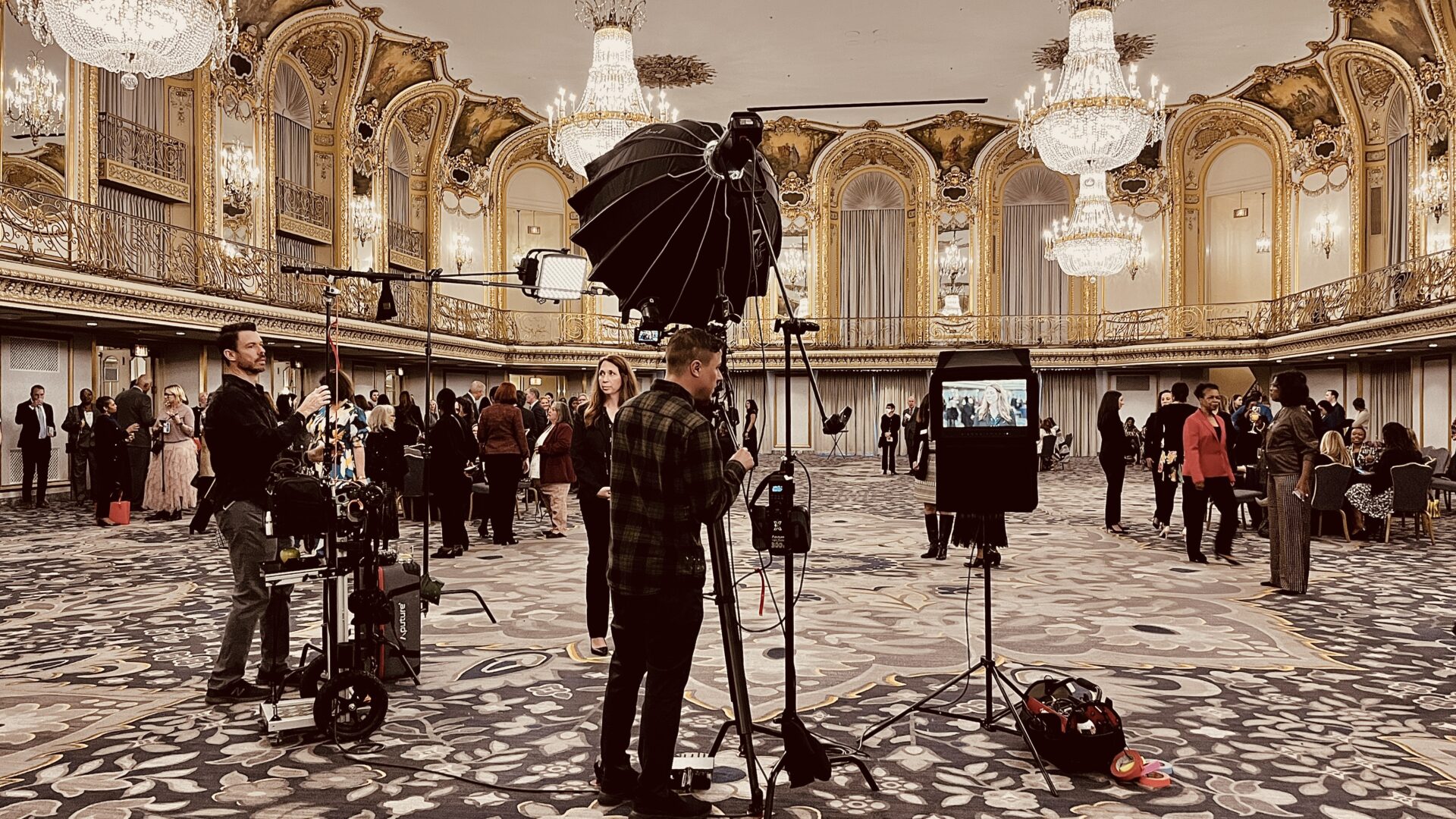
Before a single word of your video is spoken, the audience has already formed an impression. Proper lighting, thoughtful framing, clean audio, and professional editing, these things signal that your brand takes itself seriously.
In a world where anyone can generate a passable video in twenty minutes, a well-produced video stands out precisely because it required effort. That effort reads as care, and care builds brand trust.
4. Being Human Is Now a Competitive Advantage
This is the part that not enough brands are talking about. As AI-generated content floods every platform, professionally produced, authentically human video is becoming rare, and rare things get noticed.
If your competitors are cutting corners with AI avatars while you show up with real people, real stories, and real production quality, you’re different. You become the obvious choice for every customer who’s tired of being marketed to by machines.
What Happens When Brands Get This Wrong
This isn’t hypothetical. We’ve watched it play out, and so have you.
People have gotten very good at spotting AI-generated content. When they see it in a brand ad, they don’t just move on. They post about it, quote-tweet it, leave comments, and start conversations that no communications team wants to manage. The backlash isn’t always massive, but it chips away at something important.
When you use the same AI video tools as everyone, you start to look like everyone else. Same synthetic voices. Same generated faces. Same style of movement.
Your brand loses its face, literally, and in marketing, if you can’t be remembered, you won’t be chosen.
One AI-generated video doesn’t sink a brand. But six months of content that consistently feels off? That adds up.
By the time you see the drop in engagement or conversions, the trust has already been leaking for a while.
How to Use Video to Rebuild Trust
So what should you do? Here’s the straightforward answer.
1. Lead With Real People
Your team, your customers, and your leadership are your most credible voices. A real face changes everything about how a message lands.
Testimonials, CEO communications, and team culture videos should feature real people.
2. Invest in Professional Production
This is not the place to find savings. A well-produced video tells your audience that you take quality seriously.
At Bottle Rocket Media, we put thought, time, and intention into every detail, from concept development and scripting to lighting, sound design, and post-production. Because when your video looks and feels elevated, your brand does too.
3. Tell Stories That Couldn’t Be Generated
The best brand videos don’t feel like ads. They feel like something true.
The startup that almost shut down in year two. The customer who tried everything before finding your product. The team that worked through the weekend because they actually cared. These stories are real and relatable. No AI model can write them from scratch because they haven’t lived them.
4. Be Transparent About What You’re Creating
If you use AI-generated elements in your video, say so. Research consistently shows that transparent disclosure actually improves consumer response; it doesn’t hurt it.
People can handle honesty. What they don’t forgive is feeling tricked.
5. Use AI to Support, Not to Replace
There’s nothing wrong with using AI in your production workflow. Use it for research, motion graphics, editing efficiency, and distribution.
Just don’t let it walk in front of the camera for you. Automation can scale content, but it can’t replace credibility.
Ready to Reclaim Your Brand Trust?
The authenticity gap is real. Your audience is already feeling it, and the brands that act now, investing in real, human-led video production, are the ones who’ll be ahead of it, because they understand how to build brand trust in a changing landscape.
At Bottle Rocket Media, this is what we do. We’ve spent years helping brands tell real stories on camera.
From concept through final cut, we handle everything: scriptwriting, casting, production, editing, motion graphics, and video marketing. We don’t just make videos that look good. We make videos that move the needle.
Explore our video production services and video marketing services, or just reach out and tell us what you’re thinking. We’ll take it from there.